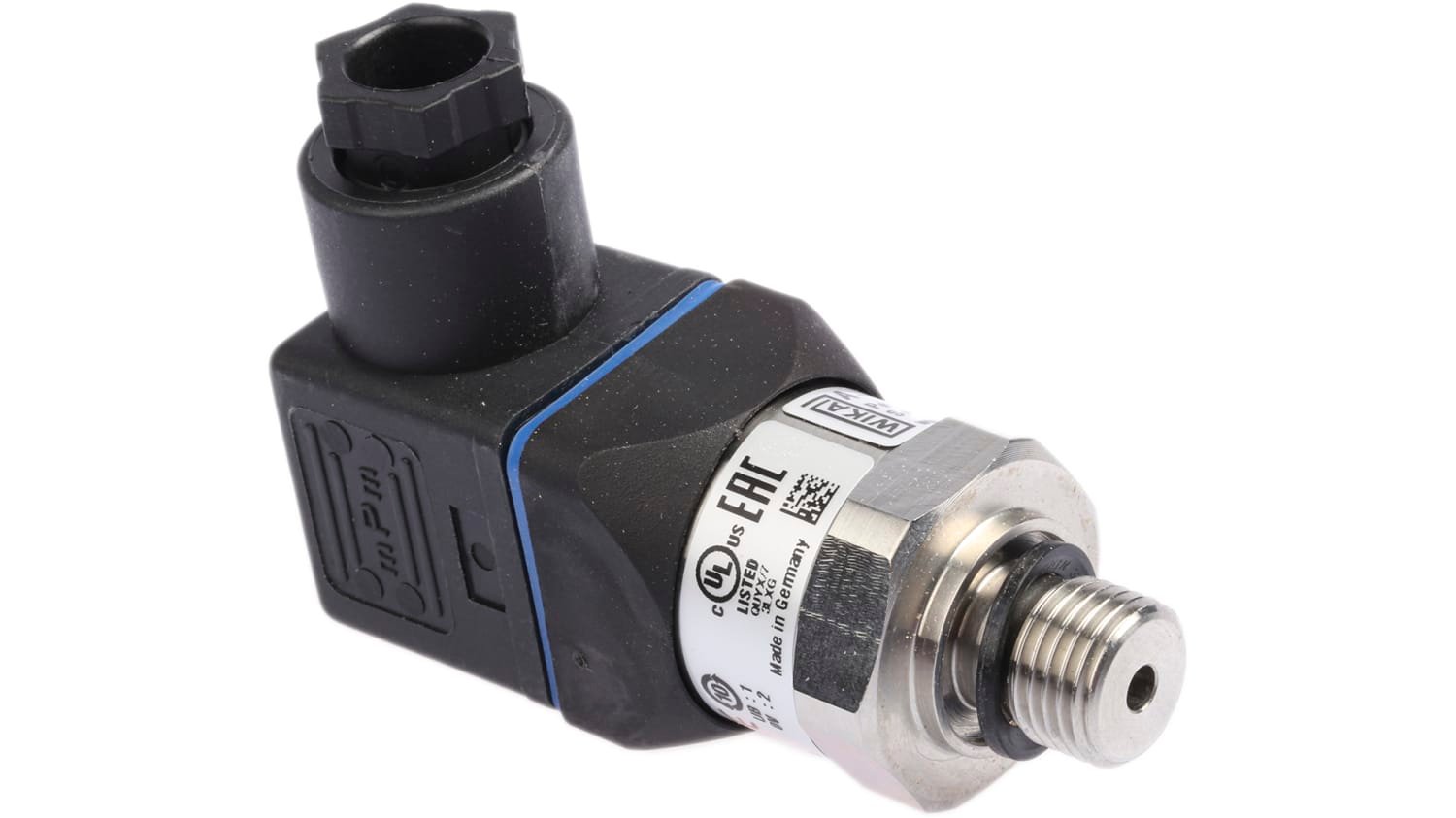
Hydraulic Pressure Transmitter: The 2 Types
Hydraulic processes are everywhere. And making all hydraulic operations safe and efficient is a device called hydraulic pressure transmitter.
From the brakes of an ordinary car to the boom of a heavy-duty lifting machine, all devices employ a hydraulic system for power transmission. And all these systems use pressure transmitters for efficient process control.
What is a Pressure Transmitter?
Before we can understand hydraulic pressure transmitters, we must see what a pressure transmitter is.
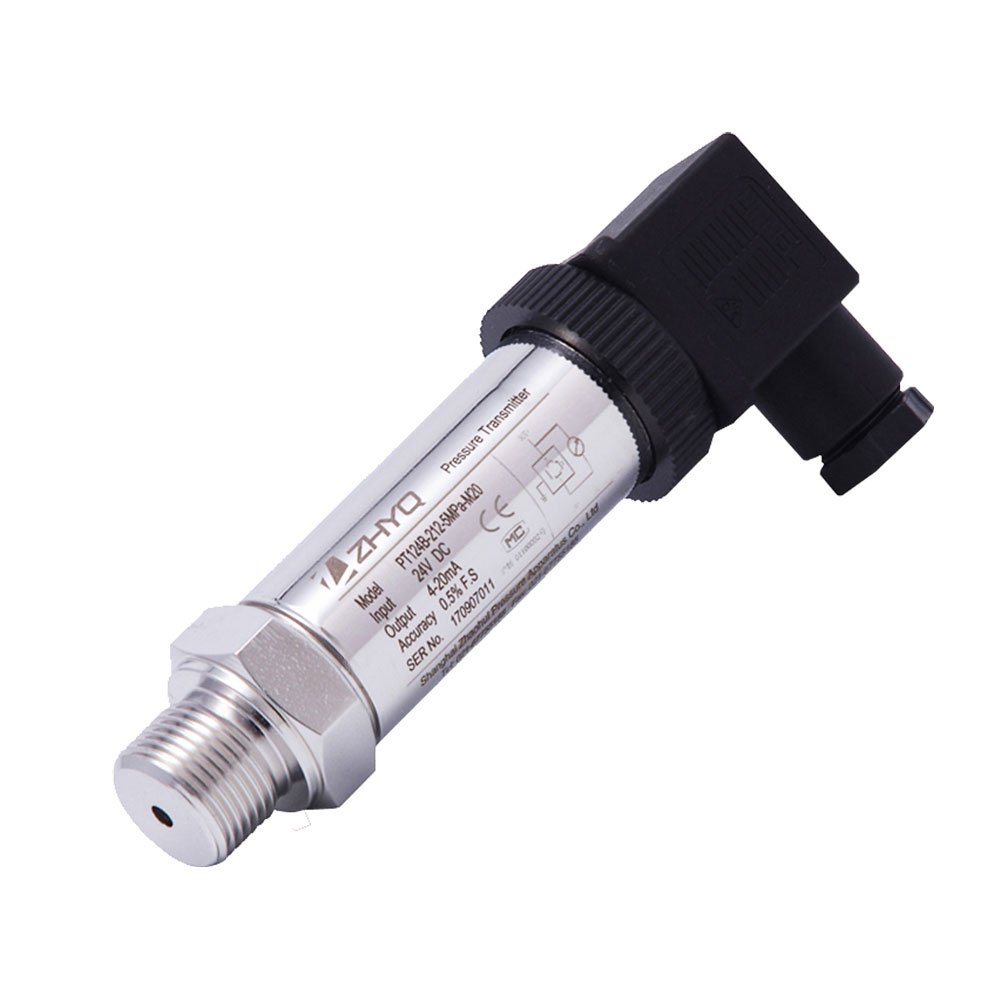
Pressure transmitter measures the pressure of the system. Then it converts it into electrical signals and transmits it over to a remote receiver. The receiver then reads and translates it and takes or helps initiate any further action.
A pressure transmitter consists of a pressure sensor, a signal amplifier and a signal transmitter.
The sensing element consists of a diaphragm which deflects with pressure. This deflection of the sensing element helps generate electrical signals, the transmitters than transfers these signals to a remote controller.
The controller understands these signals and translates them in some other form of signals that humans can easily decode. And understand what’s going on in the system.
Apart from helping humans understand the conditions of the system, a controller supported by a pressure transmitter is often well equipped to take necessary action in case of a dangerous increase or decrease in system pressure.
What is a Hydraulic Pressure Transmitter?
It wouldn’t be wrong to term a hydraulic pressure transmitter as one of the most critical components of a hydraulic system.
A hydraulic pressure transmitter ensures that the pressure of the hydraulic system is within the specified range. It signals the operators when the pressure rises beyond or drops below a certain setpoint.
Like all other pressure transmitters, a hydraulic pressure transmitter also has a diaphragm in the sensing element. This diaphragm deflects when the system applies pressure to it.
On deflection, the electrical resistance of the sensing element varies, which it translates into electrical signals and transmits to the receiver. The receiver reads these signals in terms of pressure and then takes the necessary steps.
Hydraulic pressure transmitters usually operate in a rough, harsh environment such as in a car or heavy machinery or industrial equipment. The sensing element of these hydraulic pressure transmitters often comes in contact with corrosive liquids.
So, most pressure transmitters for hydraulic applications are made with sturdy material that can withstand exposure to harmful substances and stay in service for up to millions of cycles.
For hydraulic systems, a pressure transmitter has an operating range of around 0-200 bar. However, for some applications, it can be greater than that.
Pressure transmitters also have a safe operating temperature range which defines the minimum and maximum temperature within which the device will be able to operate efficiently. For most hydraulic pressure transmitter, the safe operating temperature range lies between -40° – 80°C.
Hydraulic pressure transmitters can translate system pressure into different electrical output signals like mV, mA, V or sometimes in terms of frequency as well.
People differentiate a pressure transmitter on multiple bases. Some people classify it based on its reference pressure (differential, absolute or gauge), others define it based on its sensing element while some differentiate them on their output signals.
The reference pressure is the pressure against which a pressure sensor or gauge measures the system pressure. Hydraulic pressure transmitters are often differentiated based on their reference pressure and are classified into two types:
- Differential Pressure Transmitter
- Absolute Pressure Transmitter
Differential Pressure Transmitter
A differential pressure transmitter measures pressure on two points of a system and calculates its difference and shows it to the operator or tells it to the control for further action.
It uses two sensors which perform the task of measuring the pressure at two different points. Some process may as well use two absolute pressure transmitters to work in unison and calculate the readings across two points in the system.
The reference pressure, in this case, is the system pressure on one end of the pressure transmitter. In hydraulics, a differential pressure transmitter would, say, measure the pressure across the inlet and outlet of the valve and calculate its difference to ensure that both pressures are equal and that there are no blockages in the system.
Measurements of a differential pressure transmitter are independent of atmospheric pressure; thus, changes in the atmospheric conditions do not influence its readings.
Absolute Pressure Transmitter
An absolute pressure transmitter measures the pressure against a perfect vacuum. Because these transmitters are independent of the atmospheric pressure, absolute pressure transmitter readings are not affected by changes in altitude, atmospheric temperature and pressure.
These pressure transmitters are best for the systems that are isolated from the atmosphere, such as a hydraulic system. Absolute pressure transmitters are highly accurate as they measure the pressure in a hydraulic system against absolute zero.
Applications
A hydraulic pressure transmitter finds application in all systems employing a hydraulic process. Below, we are discussing some of the most common systems and applications of a hydraulic pressure transmitter.
Braking System
The hydraulic pressure transmitter is playing a massive role in keeping you and your fellow commuters safe by monitoring your car’s hydraulic braking system.
A pressure transmitter in a braking system monitors the pressure of the hydraulic fluid. When the driver pushes down on the brake pedal, the pressure on the system fluid increases. The pressure transmitter detects this increase in pressure and signals the controller which activates the brake lights.
Power Steering System
All new cars come boasting a power steering system, but many people do not acknowledge the contribution that a hydraulic pressure transmitter makes in this system.
A power steering pressure transmitter monitors the pressure of the hydraulic oil in the steering system. It alerts the driver when the pressure is too low. Moreover, in some cases, it also records the power steering system demand. It relays this information to the engine control unit which adjusts engine power during low-speed manoeuvres.
Hydraulic Lifts
We see giant cranes lifting heavy objects to extreme heights and wonder why the operator’s cab, not tips over. In this case, too, the credits go to a hydraulic pressure transmitter.
Hydraulic pressure transmitter monitors the load on the hydraulic lifts and signals the load moment indicator when the crane reaches its lifting limit.
Hydraulic Presses
Industries employ hydraulic presses to form metallic parts. Hydraulic presses use hydraulic cylinders to transmit the pressure required to shape the pieces. The pressure is a critical variable in such applications as too high pressure can distort the part, and low pressure can cause the machine to fail in forming the right shape.
Thus a pressure transmitter is employed to monitor the pressure in the hydraulic cylinders and help the control system to ensure that the pressure is always optimum.
Injection Molding Machines
Injection moulding machines also utilize hydraulic systems for injecting the molten plastic into the moulds. This process also requires high precision when it comes to the applied pressure as high pressure can cause the molten plastic to squeeze out of the mould and with low pressure, the molten plastic will not fully occupy the mould.
Therefore, a pressure transmitter monitors and controls the pressure of the hydraulic system which drives the spiral plunger and mould opening and closing mechanism in a plastic molding machine.
Conclusion
Hydraulic pressure transmitters are the unsung heroes of all hydraulic processes. We rarely give them credit for the critical roles that they play in making the hydraulic systems safe and efficient.
There are two most common types of pressure transmitters that serve in a hydraulic system. These are differential pressure transmitter and absolute pressure transmitter.
The differential pressure transmitter measures pressure across two points in the system and calculates their difference. And an absolute pressure transmitter measures system pressure against a perfect vacuum, hence it is highly accurate.
Both types of pressure transmitters play critical roles in ensuring the efficacy of various systems including the car’s braking system, hydraulic lifts, and plastic moulding machines.
For More Information Contact Us Today!